Salesforce and Google Cloud Expand the Possibilities for Enterprise AI
Originally reported by Salesforce
Originally reported by Salesforce
The next phase of enterprise AI may depend less on individual applications and more on how effectively they work together.
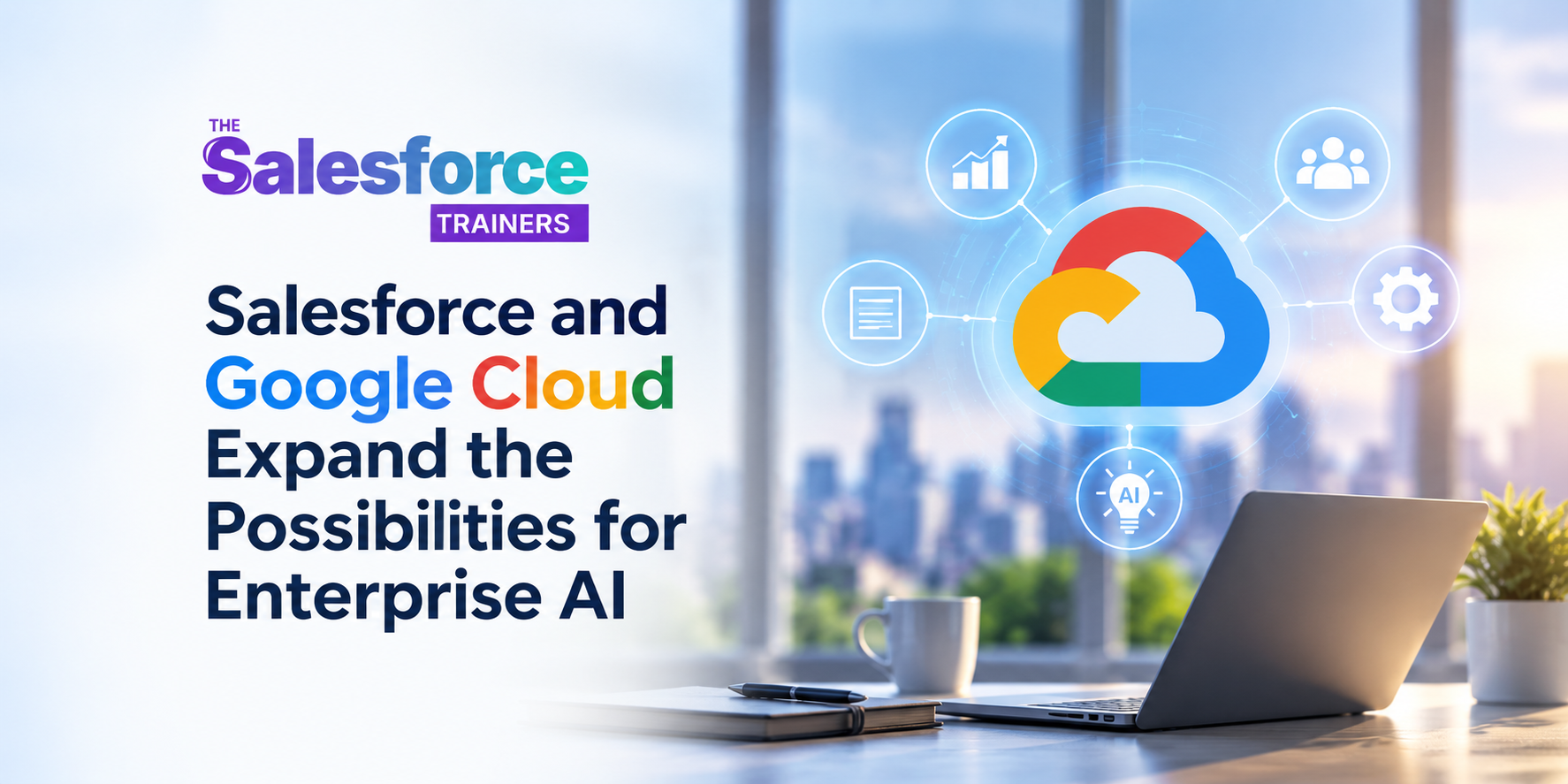
Salesforce and Google Cloud announced an expanded strategic partnership at Dreamforce 2026, introducing new capabilities designed to connect AI agents, enterprise data and business workflows across their respective platforms.
The announcement reflects a growing shift in enterprise technology. Rather than relying on isolated AI tools, organizations are moving toward connected environments where AI agents can access information and take action across multiple business systems.
Breaking Down the Barriers Between Platforms
Under the expanded partnership, Salesforce's platform and Google's Gemini Enterprise will work together to enable AI agents to reason and act across shared data and workflows.
The companies are also expanding their infrastructure relationship, with plans to run Salesforce workloads on Google Cloud through Hyperforce.
Several capabilities are already available or moving through preview and beta stages, with broader availability planned throughout late 2026 and into 2027.
For businesses, the potential is significant. Sales teams could eventually access customer insights, coordinate workflows and execute tasks across applications without relying on multiple disconnected systems.
But technology integration is only part of the equation.
Connected AI Requires Connected Processes
As AI becomes more deeply embedded in business operations, organizations will need to address a challenge that has existed long before artificial intelligence: disconnected processes and inconsistent data.
Connecting two platforms doesn't automatically create an effective sales process. If customer records are incomplete, opportunity stages are inconsistently managed or teams follow different procedures, AI agents may simply accelerate existing problems.
Sales leaders will need to establish clear workflows, define responsibilities and ensure their CRM data is reliable before expecting AI to deliver meaningful results.
The opportunity is real, but successful implementation will depend on more than technology.
As enterprise AI moves toward a more connected model, the organizations best positioned to benefit may be those that have already invested in getting their processes, platforms and people aligned.
Source: Salesforce — Salesforce and Google Cloud Unify Infrastructure and Agents for One Connected AI Stack