The Future of Salesforce Adoption: A Headless Approach
Originally reported by Salesforce Ben, Top Sales Cloud Announcements at Dreamforce ’26, September 23, 2026.
For years, one of the biggest challenges in Salesforce adoption has been getting salespeople to actually use Salesforce.
Sales reps don't want to spend their time entering data. Managers complain about incomplete records. Organizations invest heavily in CRM technology, only to discover that the information they need isn't being captured consistently.
But what if the future of Salesforce adoption isn't about getting salespeople to use Salesforce more?
What if it's about getting Salesforce to work for salespeople?
That may be where Salesforce is heading.
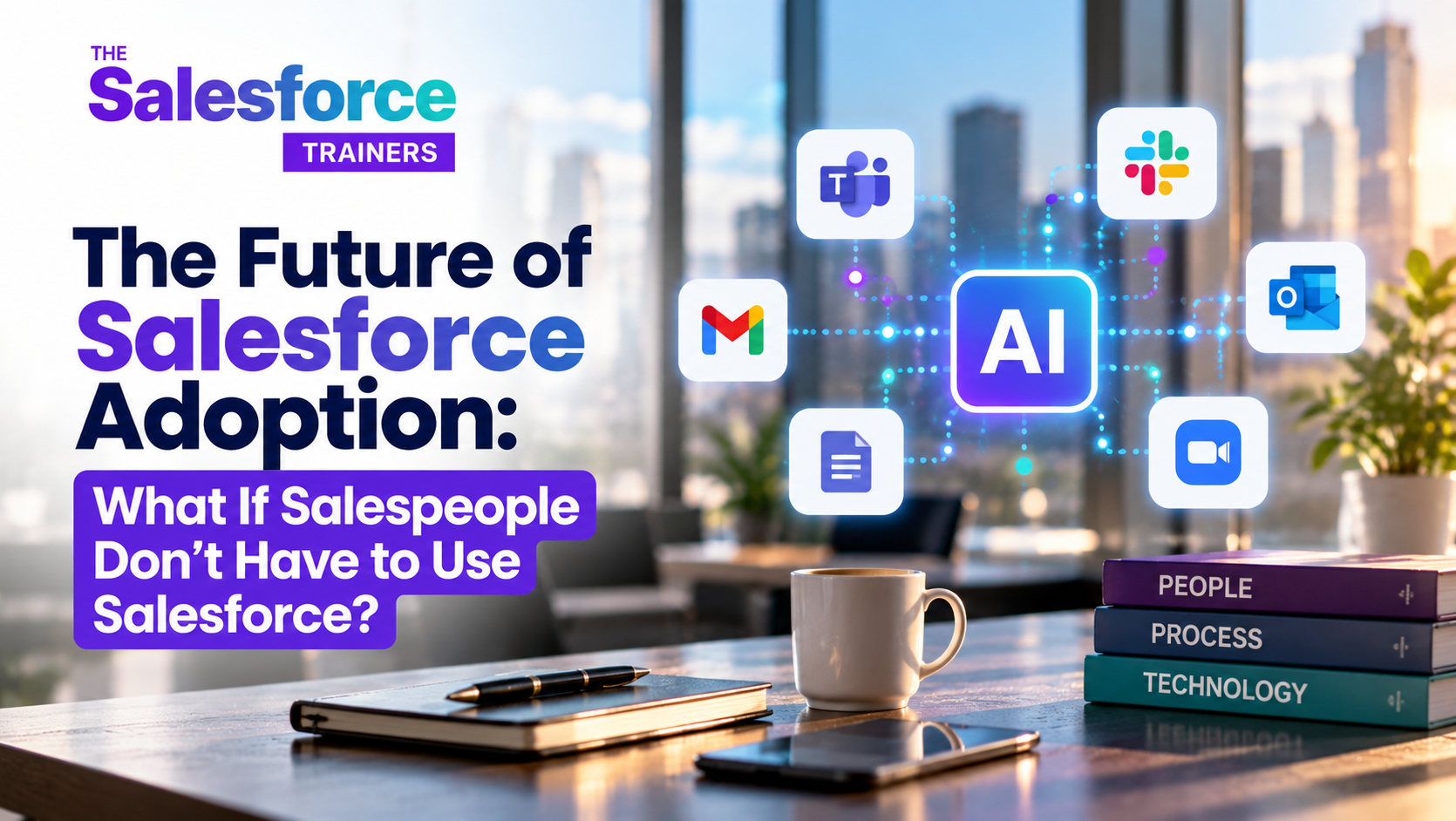
According to Salesforce Ben’s coverage of the Sales Cloud announcements at Dreamforce ’26, Salesforce is increasingly moving toward what it describes as a headless approach—making Salesforce data, automation, business logic and AI available through the tools employees already use, rather than requiring them to constantly return to the Salesforce interface.
What If Salesforce Comes to the Salesperson?
Think about the traditional CRM model.
A salesperson has a customer conversation. They take notes. Later, they log into Salesforce. They update the Opportunity. They create a Task. They enter activity information. They remember what needs to happen next.
The salesperson is responsible for putting the information into the system.
Salesforce's emerging model flips that equation.
Salesforce announced Momentum, which is designed to capture information from conversations, emails, texts, calendar events and meetings and automatically update CRM information. It also introduced Hunter, an AI sales agent designed to identify prospects and take action across the sales process.
And Salesforce is increasingly making its intelligence available through tools such as Slack, Microsoft Teams and Claude.
The result could be a very different relationship between salespeople and CRM.
The salesperson doesn't necessarily have to think about using Salesforce.
Salesforce simply becomes part of how they work.
Does This Make Training Less Important?
I actually think it makes training more important—but the nature of training will change.
Salespeople still need to understand their sales process. They need to know what information matters, how opportunities should progress, how AI should be used and how to interpret the information it provides.
And managers still need to coach.
We've written before about Why Salesforce Adoption Fails and How to Fix It. The fundamental issue isn't whether people can technically operate Salesforce. It's whether Salesforce is integrated into the way the sales organization actually works.
That principle doesn't disappear because AI is capturing more of the data.
If anything, it becomes more important.
The Future of Salesforce Adoption
At The Salesforce Trainers, we think about Salesforce adoption through Process, Platform and People.
The technology may be changing dramatically, but those three elements still matter.
The process needs to be clear.
The platform needs to support that process.
And people—particularly sales managers—need to understand how to use the information and intelligence the system provides.
We've also explored this in Claudeforce and Salesforce: What Sales Leaders Need to Know, where we looked at the possibility of Salesforce becoming something salespeople interact with without necessarily thinking about Salesforce itself.
That's a pretty significant shift.
For years, the goal of CRM adoption has been to get people to use the system.
The future may be about making the system useful enough that people don't have to think about using it.
The goal isn't more time spent in Salesforce.
The goal is better information, better processes, better decisions and more selling time.
And that could change the definition of Salesforce adoption altogether.
Source: Salesforce Ben — Top Sales Cloud Announcements at Dreamforce ’26